
Process optimization driven by Industry 4.0 technologies is accelerating rapidly across the domestic glass manufacturing sector. In particular, the automation of the traditional, highly labor-intensive “swabbing” process is emerging as a game-changer, successfully achieving both quality enhancement and manufacturing cost reduction.
What is the Swabbing Process?
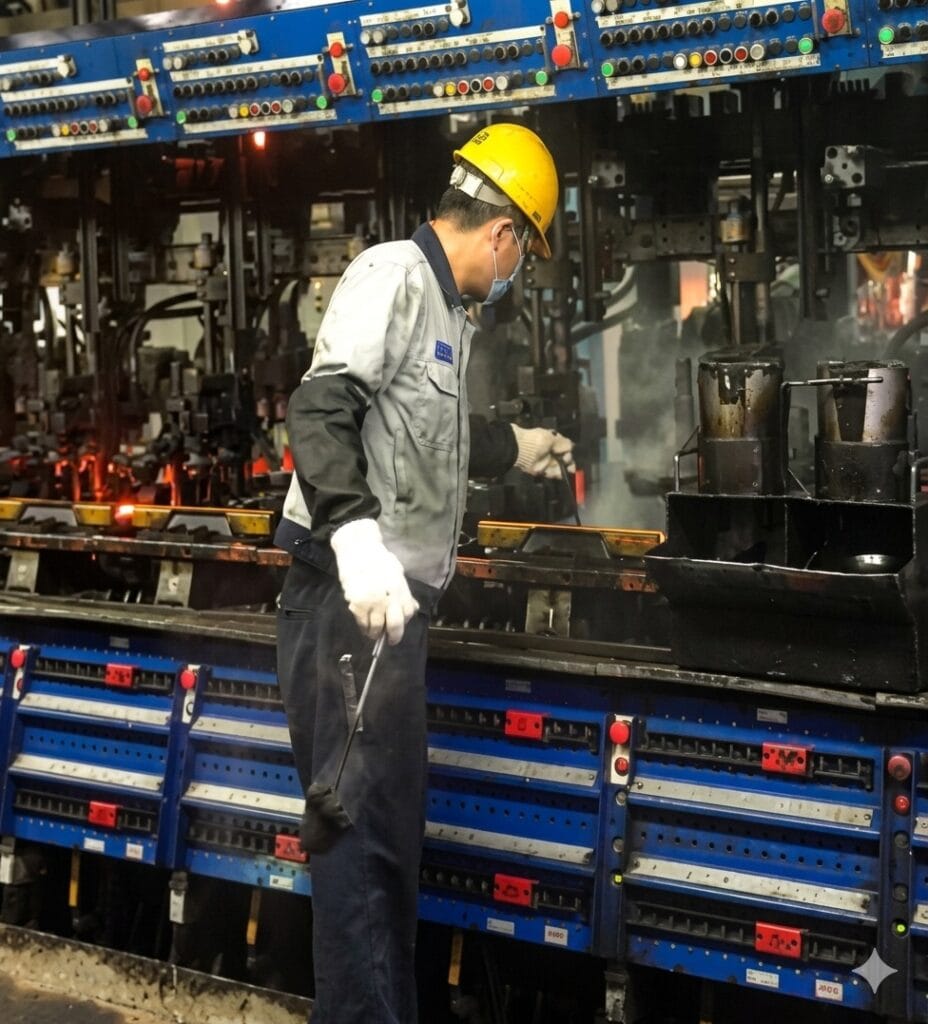
During the glass forming process in an IS (Individual Section) machine, operators must manually apply a graphite-based release agent (mold lubricant) into the molds every 20 to 30 minutes using a swab. This essential step ensures critical lubrication between the high-temperature molten glass and the mold, prevents mold oxidation, and stops the glass from sticking to the container walls.
The Bottlenecks and Inefficiencies of Manual Operations
Traditionally, the manufacturing floor relied heavily on the individual skills and experience of operators for manual swabbing. However, this manual approach exposes several critical limitations:
Inconsistent Quality: Variance in application volume and positioning across different operators directly leads to product defects.
Resource Waste & Contamination: Excessive oil application causes product contamination and generates unavoidable cullet (broken/rejected glass) waste.
Decreased Productivity: Operations must be temporarily halted or slowed during manual intervention, significantly lowering overall equipment efficiency.
Occupational Safety Hazards: Performing manual tasks in close proximity to high-temperature machinery poses continuous safety risks for personnel.
According to real-world operational data, manual swabbing results in a loss of approximately 3 to 8 bottles per cycle due to oil contamination, accumulating to thousands of tons in annual production losses.
Automated Swabbing Robots: The Catalyst for Digital Transformation
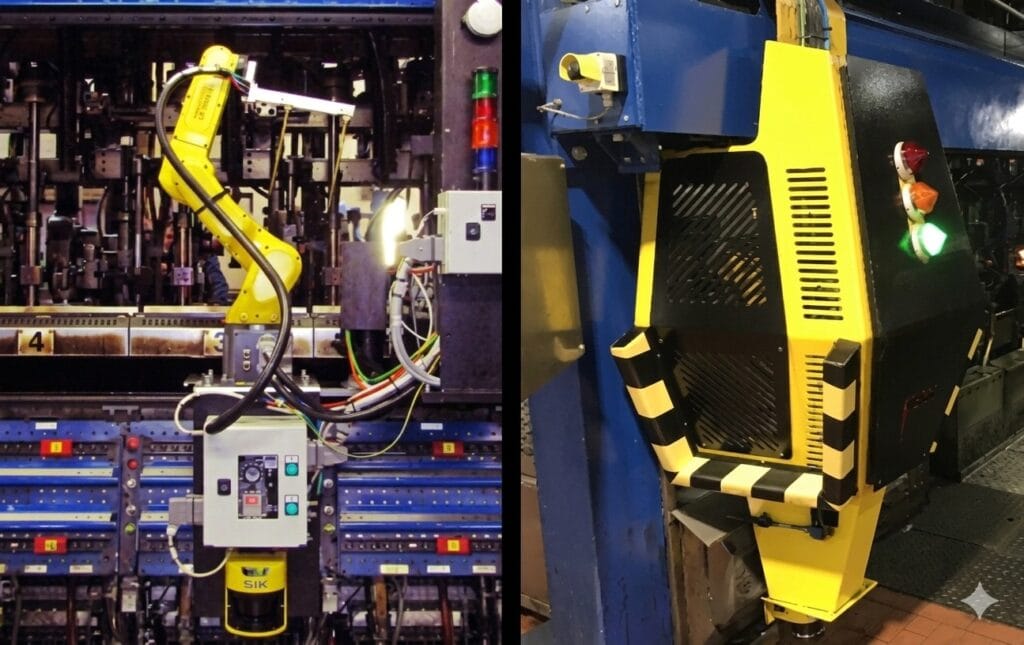
To resolve these systemic bottlenecks, Automated Swabbing Robots are drawing significant attention as the core engine for process optimization. The integration of robotics enables precise, real-time lubrication without stopping the machinery, drastically boosting manufacturing throughput.
By leveraging world-leading technologies from global pioneers such as Novaxion, Socabelec, and XPAR Vision, these advanced systems achieve uniform application, effectively driving swabbing variance down to zero.
Mitigation of Production Losses: Reduces swabbing-related product rejects and defects by over 50%.
Direct Cost Reduction: Cuts mold lubricant and oil consumption by approximately 80% compared to conventional methods.
Enhanced Workspace Safety: Prevents serious industrial accidents by completely removing human operators from hazardous, high-heat environments.
Future Outlook and Expansion Roadmap
Although the initial investment stands at approximately 400 million KRW per unit, the technology is evaluated as highly competitive with a robust ROI (Return on Investment), rapidly driven by drastic quality improvements and waste mitigation.
Dongwon Systems is actively leading this technological shift, signaling a major leap forward in global competitiveness for the Korean glass packaging industry.
“We have successfully completed the deployment of robotic units and plan to expand this automated system across all production lines,” stated a representative from Dongwon Systems. “This initiative goes beyond simple automation; it is a critical transition toward a data-driven precision manufacturing ecosystem.”